
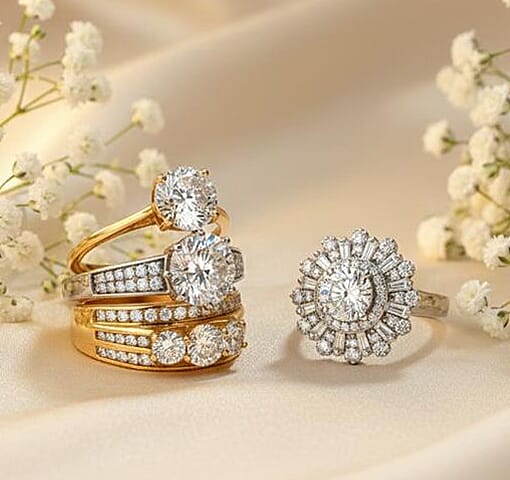
Diamond
Revered for its unmatched brilliance and hardness, formed deep within the earth over billions of years.
Explore DiamondFormed over millions of years from silica-rich water, opal is treasured for its remarkable play-of-colour, where shifting flashes of blue, green, pink and gold appear as the stone catches the light. Each opal displays its own unique pattern and character, making every piece naturally individual. Celebrated as the birthstone of October, it remains one of the most distinctive gemstones in fine jewellery.
Hydrated silica, not a crystal
Mohs hardness scale
Birthstone month
Traditional anniversary gift
Zodiac association

The story of opal formation begins with rain. In dry regions, seasonal water moves through the ground and absorbs silica from sandstone and other rocks. Over time, this silica rich solution travels into cracks, cavities and openings beneath the earth.
As the water gradually evaporates, it leaves behind layers of silica. Over millions of years, these layers harden and develop into opal. In precious opal, microscopic silica spheres form an orderly arrangement. When light passes through them, it produces the rainbow effect for which opal is celebrated. It is created through the slow combination of silica, water, geological pressure and time.
Opal isn't a crystal like sapphire or diamond. It's silica and water, arranged in microscopic spheres that split light into colour.

Every other coloured gemstone gets its colour from minerals mixed into a crystal structure. Opal is different — its colour comes from structure alone.
Each variety is defined by its body tone, play-of-colour and where it's mined.
| Opal Variety | Body Tone | Distinguishing Feature | Primary Source |
|---|---|---|---|
| Black Opal | Dark to black, usually N1 to N4 | Intense play of colour against a dark background | Lightning Ridge, New South Wales |
| Fire Opal | Yellow, orange or red | Warm body colour created by iron content, with optional play of colour | Querétaro and Magdalena, Mexico |
| Boulder Opal | Dark ironstone matrix with seams of opal | Natural opal formed within ironstone | Queensland, Australia |
| Ethiopian or Welo Opal | White, translucent, honey toned or near colourless | Bright colour play and hydrophane nature | Wollo Province, Ethiopia |
| White or Light Opal | White, cream or pale body tone | Soft to vivid play of colour on a light background | Coober Pedy and Andamooka, Australia |
| Crystal Opal | Transparent or semi transparent | Clear body with vivid internal play of colour | Australia and Ethiopia |
Three ideas carried across cultures and centuries.
Ancient cultures read opal's shifting colours as a sign of hope and possibility — a stone that changes as you do.
Roman writers called it "cupid paederos" — child as beautiful as love — prizing it as a symbol of purity.
Holding every colour at once, opal has long been worn as a muse stone by artists and creatives.
From Roman treasuries to a 19th-century superstition it's since outgrown.

Romans ranked opal above nearly every other gem, believing it carried the virtues of every colour it contained.

Legend tells of a creator who landed on earth on a rainbow — where its feet touched the ground, the rocks burst into colour.

Victoria wore opal often and gifted it to each of her daughters, reviving its popularity across 19th-century Europe.

An 1829 novel linked opal to bad luck, denting sales for a generation — a superstition modern gemology has fully retired.
Precious opal is mined in only a handful of places worldwide, and where a stone comes from can shape both its pattern and its price. Roughly 95% of the world's supply comes from a single country — Australia — with smaller but significant deposits in East Africa and the Americas.

Roughly 95% of the world's precious opal. Lightning Ridge yields rare black opal; Coober Pedy is famous for white opal.
Wollo Province opal, found in 2008, is known for exceptionally bright play-of-colour in crystal and fire opal.
The traditional home of fire opal — warm orange and red stones prized for colour rather than play-of-colour.
Brazil yields translucent crystal opal; Nevada's Virgin Valley is one of the few sources of opalised fossils.
Both flash light in ways that catch your eye, and both get mistaken for the other constantly. Here's what actually separates opal from moonstone — no marketing spin.
Gemologists evaluate opal by body tone, play-of-colour, pattern and carat weight.
Rated N1 (black) to N9 (white). Darker tones make colour flashes appear brighter and more valuable.
Judged on brightness and how many spectral colours show — a full rainbow outranks a single flash of green.
Rare patterns like harlequin, a mosaic of colour blocks, command far higher prices than common pinfire flecks.
Cut to preserve colour first, so opal shapes are often free-form rather than standard cuts.
MOHS SCALE OF HARDNESS
Opal is softer and more porous than most gemstones, which means it scratches more easily and needs a gentler daily-wear routine than a ruby or sapphire. That's not a flaw — it's just a different set of habits.
Natural vs. lab-made, at a glance
Its softness doesn't mean it should stay in a box — it just changes how you wear it.

1. Use mild soapy water only when necessary
2. Wipe the gemstone with a soft, slightly damp cloth
3. Dry the piece gently with a clean, soft cloth
4. Remove opal jewellery before swimming, bathing or exercising
5. Store it separately in a soft jewellery pouch
6. Keep it away from perfume, hairspray, cosmetics and household chemicals
The same stone wears differently depending on where it sits.

The classic way to wear opal — a solid bezel setting protects the stone through daily wear.

The safest style for daily wear, since the stone stays clear of knocks.

Colour and movement without the risk that comes with rings.

A statement piece — best kept for occasion wear rather than everyday knocks.
Opal is the traditional October birthstone, cherished for its luminous play of colour and deep personal character. Each gemstone reveals a different blend of light and colour, making it a meaningful choice for an October birthday gift or a piece of jewellery designed to mark a special occasion.
Shop Opal Jewellery →
Revered for its unmatched brilliance and hardness, formed deep within the earth over billions of years.
Explore Diamond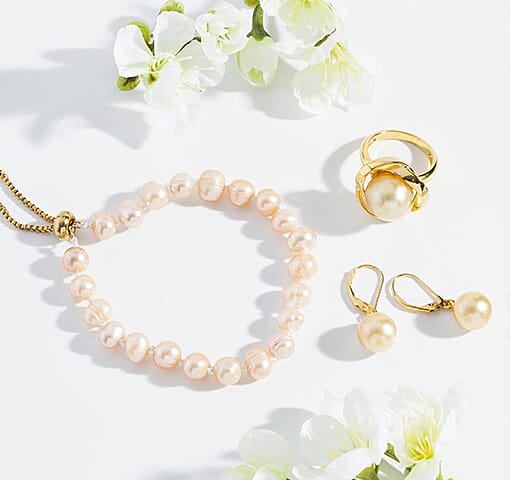
Naturally found in oysters and created by living organisms, pearls are admired for their luminous shine and soft glow.
Explore Pearl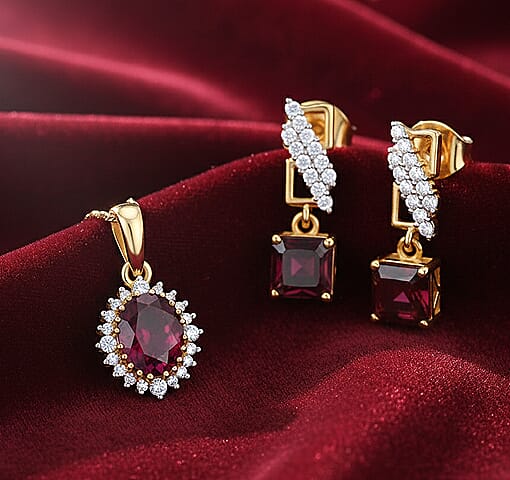
Known as the king of gemstones, ruby is prized for its vivid red colour and its symbolic ties to power, prosperity and love.
Explore Ruby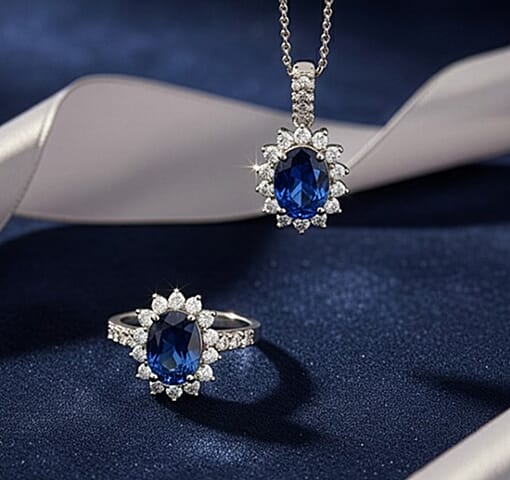
Mainly found in Tanzania, this rare gemstone is known for its mesmerising intense blue hue that shifts with the light.
Explore Tanzanite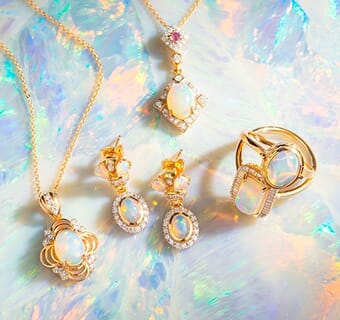
Mainly found in Tanzania, this rare gemstone is known for its mesmerising intense blue hue that shifts with the light.
Explore Opal
Opal is a very fascinating gemstone, known for its enchanting flashes of rainbow colours. Formed through a natural process from silica and water, where each opal produces a unique pattern over time. From Ethiopian opal to fire opal, each variety of opal showcases a mesmerising and remarkable beauty.
Opal is renowned as the traditional birthstone of October and one-of-a-kind appearance. The mesmerising play of colours makes opal jewellery a perfect choice for keepsake and meaningful gifting for October born.
Fire opal is recognised for its warm body colours, ranging from yellow and orange to red, often with a glowing appearance. Ethiopian opal is admired for its vivid play of colour, showing flashes of blue, green, pink and other shades across its surface.
On the Mohs scale of hardness, opal ranked 5.5-6.5, requiring gentle care to prevent its natural hue and shine. Yes, it is suitable for everyday wear but with proper care, avoiding using any harsha chemicals. Proper care will help the opal to maintain its beauty and appearance for a longer period of time.
Every stone shows its own pattern of colour — browse the current collection to find yours.
