
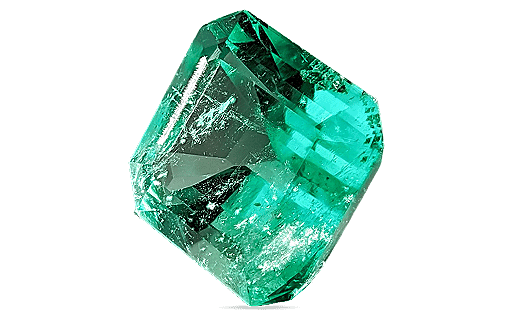
Emerald Colour
Comes generally in a six-sided prism form, which makes the emerald gemstone best suited for the emerald cut (featuring rectangular cuts).

Emerald is May’s birthstone and makes for one of the rarest gemstones on Earth. Revered for its deep green hue and transparency, it symbolises creation, fresh beginnings, and a kind of love that grows and flourishes, emeralds carry feelings. Loved by royals from Cleopatra to the Crown, this gemstone can make everything feel fresher in your jewellery box.

Hardness
7.5-8 Mohs

Birthstone
May

Emerald is the official birthstone for the month of May. This precious gemstone, belonging to the beryl mineral family, is revered for its rich green colour and rarity in the jewellery world. May arrives, and everything feels glorious green; the trees, the parks, and the Sunday market brimming with the freshest crops. To put it simply, Emerald, with its living green colour, looks like the spring itself decided to become a stone. Owing to its vibrant green appearance, emeralds are often associated with growth, renewal, and new beginnings, the very qualities that perfectly align with the spring.
Emerald stone's lush green colour channels the energy of the spring, which means the promise of abundance and the best days ahead. Emerald green gemstone is also associated with love, loyalty, and wisdom. This is because in ancient Rome and Greece, emeralds represented the goddess Venus, who was associated with love, beauty, and fertility. Interestingly, emerald is also considered the anniversary gemstone of the 20th, 35th, and 55th year of marriage.
The word emerald comes from 'smaragdos' in Greek, which literally translates to the 'green gem' in English. Known as Cleopatra's favourite gemstone, emerald makes for one of the rarest coloured gemstones found on earth. Often known as the 'gemstone of royalty', these stones have crowned the jewels of European monarchies and some of the most powerful figures in world history. They have been a part of British royal jewellery for centuries and have been appearing in everything from statement necklaces to bracelets. From Queen Elizabeth's Vladimir Tiara to Princess Diana's green emerald choker necklace to Princess Eugenie's wedding tiara, green emerald has enjoyed a prominent place in the jewellery collection of royal families. This May birthstone was also worn as talisman jewellery by the famous Mughal emperor Shah Jahan, who built the Taj Mahal. Traditionally, emeralds were believed to protect the wearer from evil and were considered sacred. The emerald stone was first mined in Egypt in 330 BC, but the oldest emeralds are known to be as old as 2.97 billion years. From Egyptian pharaohs to Inca emperors, these vibrant green gemstones have been a favourite of royalty.
The 4Cs of diamonds refers to cut, carat, colour, and clarity. These are the four standards globally used to evaluate a diamond stone's value and quality. Every buyer must navigate through these 4Cs, the universal grading system to understand exactly what you are paying for.
Comes generally in a six-sided prism form, which makes the emerald gemstone best suited for the emerald cut (featuring rectangular cuts).
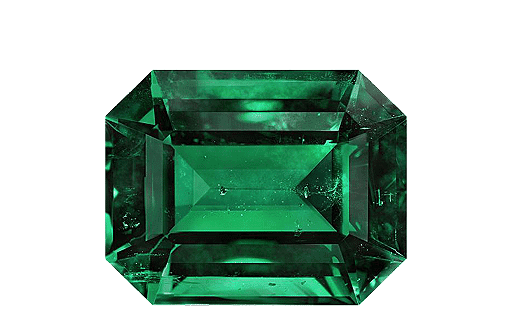
Comes with inclusions called ‘jardin’ or ‘garden’. Emeralds are not eye-clean, and inclusions in them are considered valuable.
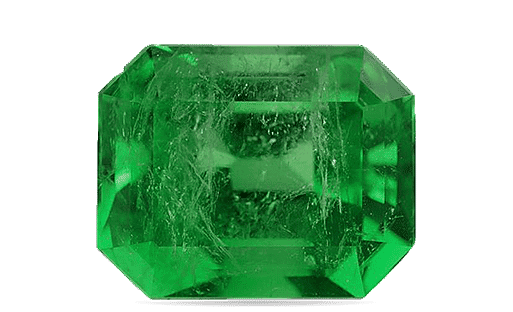
Comes with a lower density than diamonds, which means a one-carat emerald can appear to be larger than a one-carat diamond.
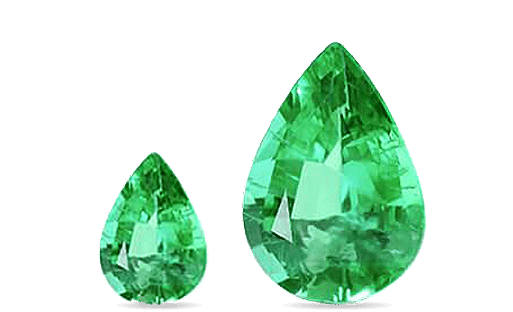
Comes with a lower density than diamonds, which means a one-carat emerald can appear larger than a one-carat diamond.
Emerald sets the standard by which all other green gemstones are measured. Let’s know more about their unique geological properties.

Emerald is a green to blue-green variety of mineral beryl, composed of silicate beryllium and aluminium.

Emerald falls between 7.5-8 on the Mohs hardness scale and is considered to be fairly resistant to scratches.

Emeralds are sourced from Zambia and Colombia. They are also found in the United States, Austria, Afghanistan, India, etc.
Comes in the range of 1.577 -1.583, which gives it a moderate level of fire and brilliance.

Emerald factures are filled with oils, waxes, polymers, artificial resins, essential oils, etc, to improve their clarity.

Emerald stone value is determined by its colour, clarity, transparency, and origin. The emerald jewellery can price can vary from £100-£ 59,999 and more.

Gives off a vitreous lustre, which gives the emerald a glassy appearance and a glow-from-within allure.
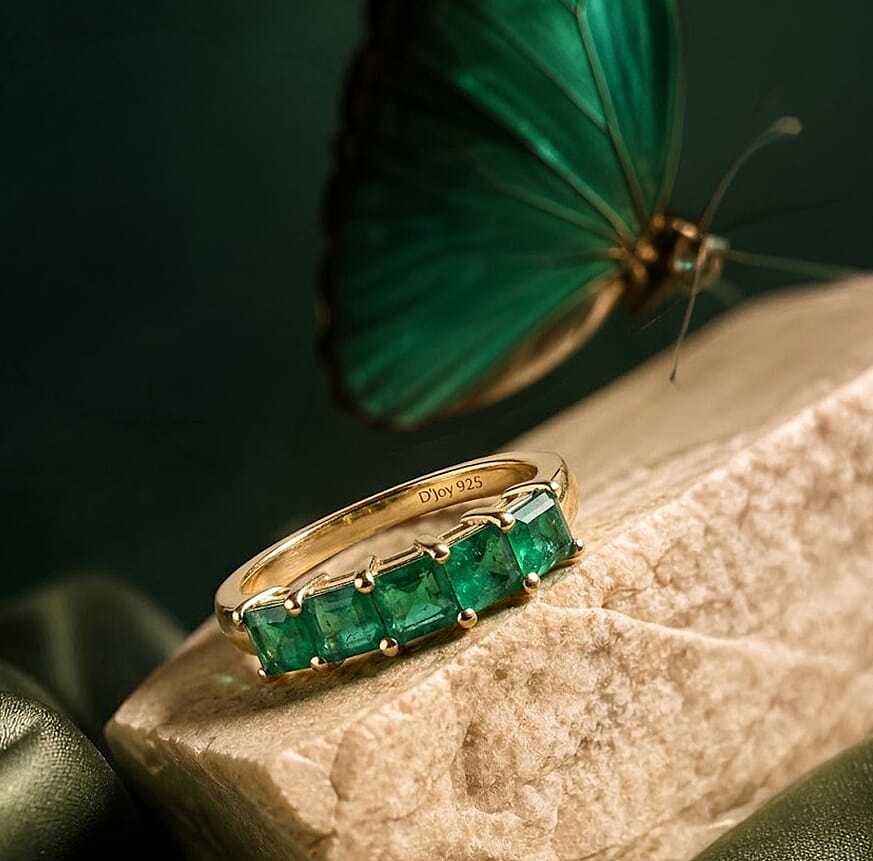
Emerald colours range from pure green to yellowish green to blue green. Let's learn about their different types of emeralds and their colours.
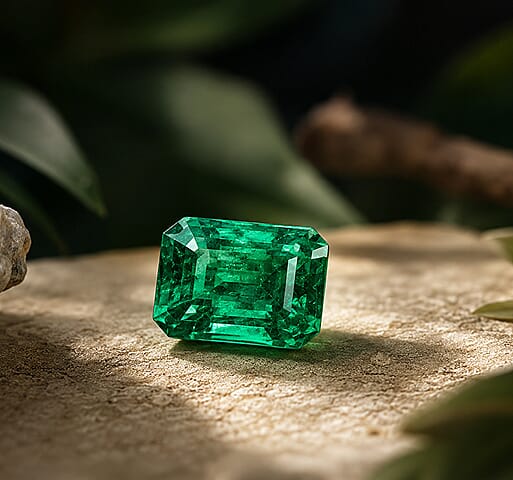
They have more inclusions or irregular patterns called 'jardin'. These flaws actually add to the emerald stone's beauty.
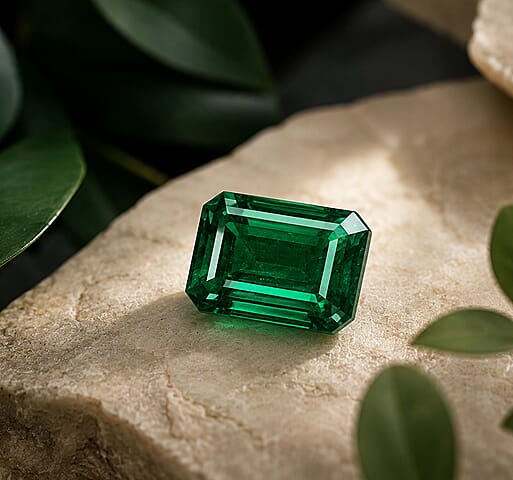
Exhibits a warm, green colour and makes for one of the finest emeralds in terms of size, colour, brilliance, and purity.
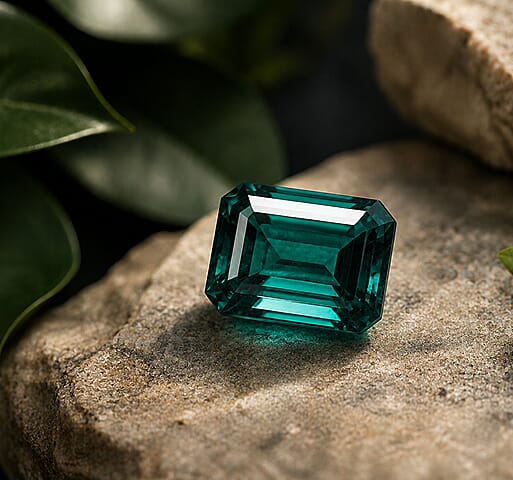
Showcases greenish-blue, cool tones. They are revered for their clarity and brilliant lustre.
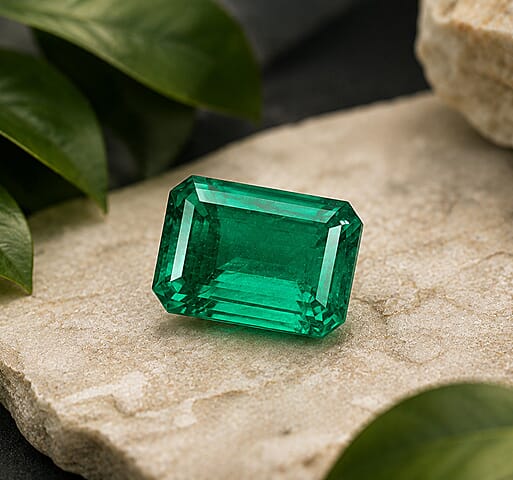
Exhibits a light green colour saturation. They were first found in Brazil in the year 1920.
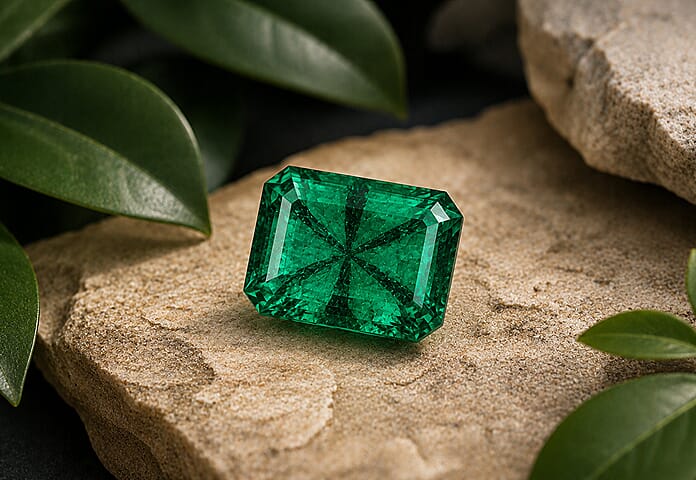
Extraodinarity rare, these emeralds feature a distinct pattern that looks like a wheel with six spokes. Found in the mines of Colombia, South Africa, they make for one of the most prized emeralds of all.
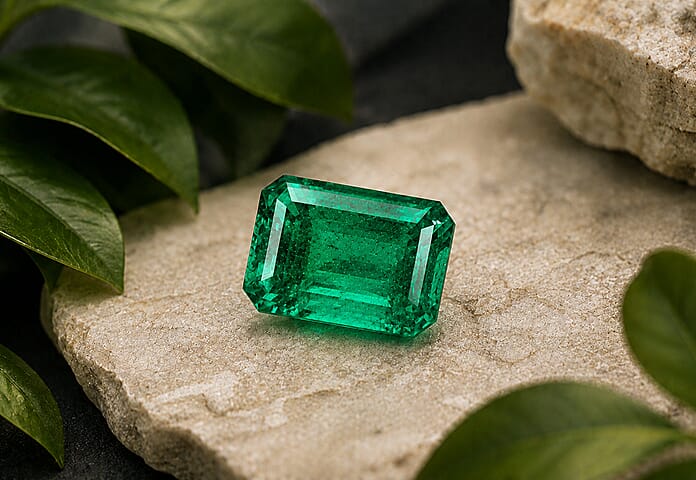
Radiates a minty green colour that glows. They make for high-quality emeralds found in the Shakiso area of Southern Ethiopia.
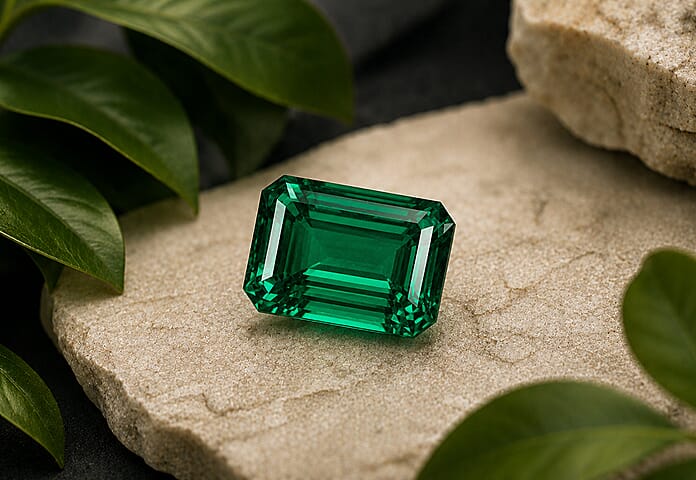
Lab grown emeralds are identical to natural emeralds in chemical composition but do not come with inclusions, unlike mined emeralds.
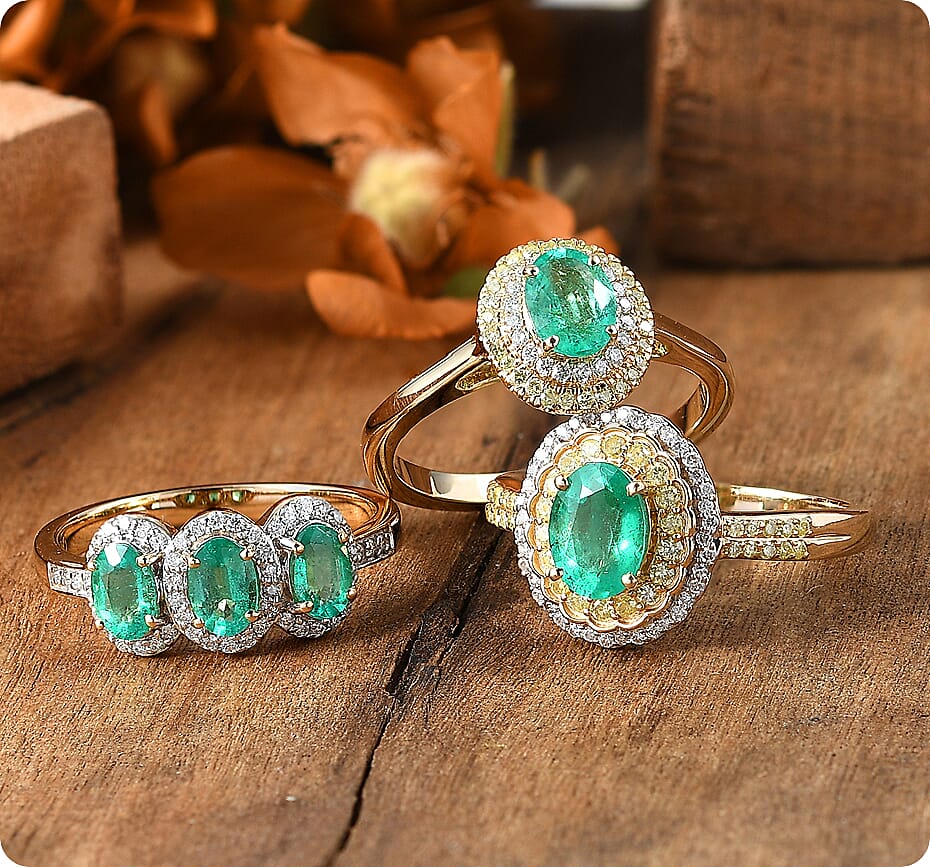
Together with ruby, diamond, and sapphire, emerald is one of the four most precious gemstones in the world.
Emeralds get their green hue from trace amounts of iron, chromium, and vanadium in their crystal structure.
Rarer and generally more expensive than diamonds, emeralds make for one of the earth's rarest treasures.
The only gemstone in the world to have a cut named after it, that is the iconic Emerald Cut.
50% of the world's emeralds come exclusively from Colombia in South America.
Natural emeralds generally come with natural inclusions and give off a blue-green to pure green hue when held against a source of light. If the stone you are holding radiates yellow or brown undertones, then it is most likely fake.
To determine an emerald’s authenticity, is to pay close attention to its shine. Emerald stones have little or no fire; if the jewel gives off rainbow-like flashes, then it is probably a fake emerald jewellery.
The best and most accurate way to determine the emerald's genuineness is by getting it inspected by a professional jeweller.
To clean the emerald jewellery at home, prepare a solution of warm water and chemical-free soap. Use a soft brush to scrub the gemstone gently.
Never soak the emerald jewellery in the soapy water or solvents such as alcohol, paint thinner, or acetone.
Never use ultrasonic devices or steam as it can damage the stone or cause fractures.
Do not expose your emerald jewellery to extreme solar radiation or heat as it can dry out the facture fillings.
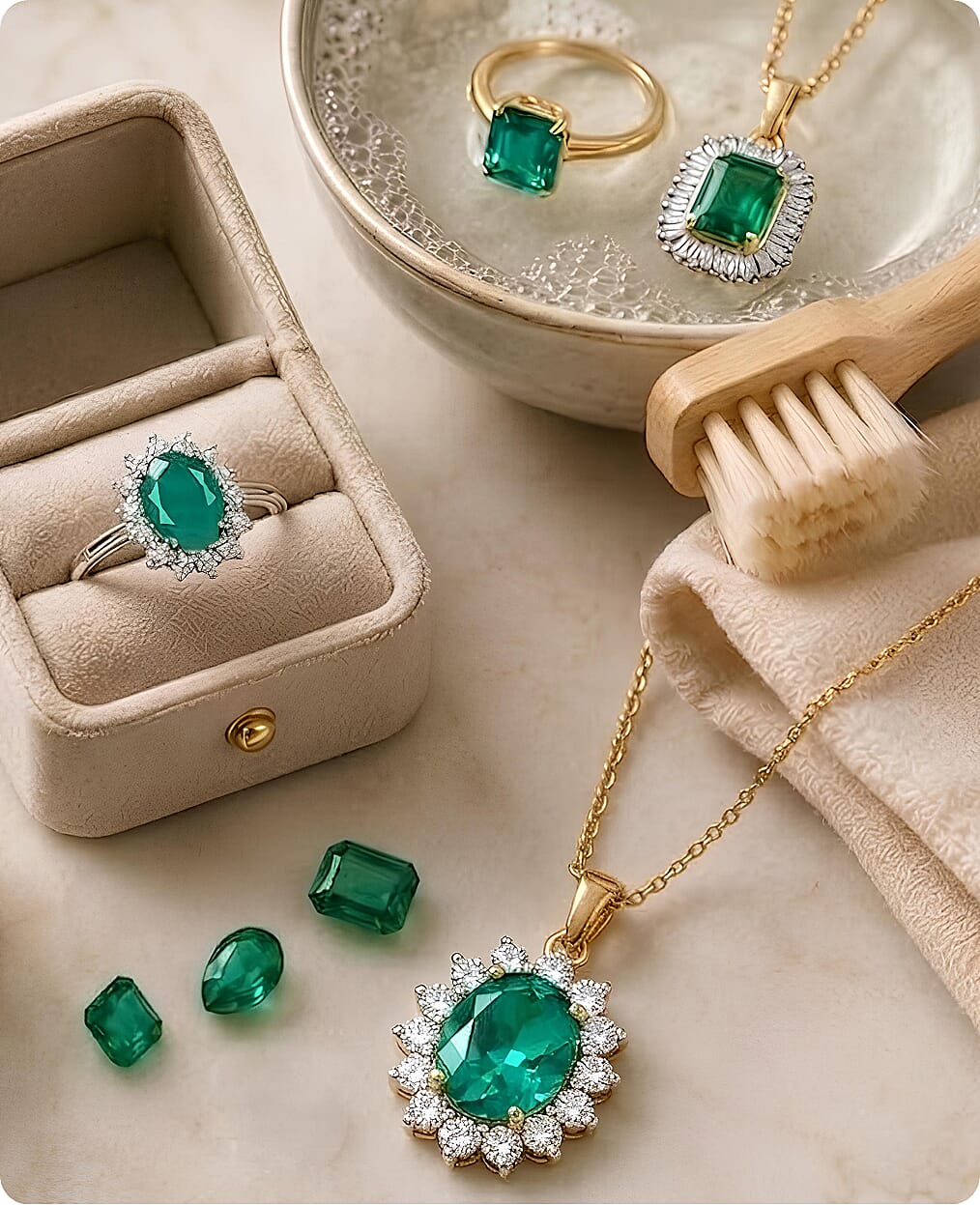
Always take off jewellery before doing any physical activities or cleaning tasks.
Regularly inspect your emerald green jewellery, look for loose stones or damage, and spot clean when necessary.
Always clean your may birthstone jewellery before storing it in a soft-lined jewellery box.
Get your emerald stone jewellery professionally cleaned every six months to keep them looking bright and vibrant.
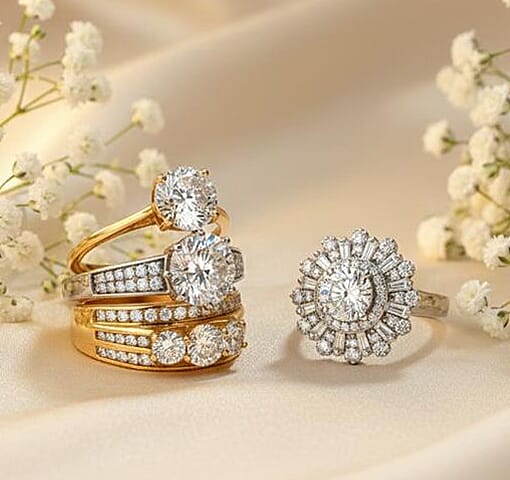
Revered for its unmatched brilliance and hardness, formed deep within the earth over billions of years.
Explore Diamond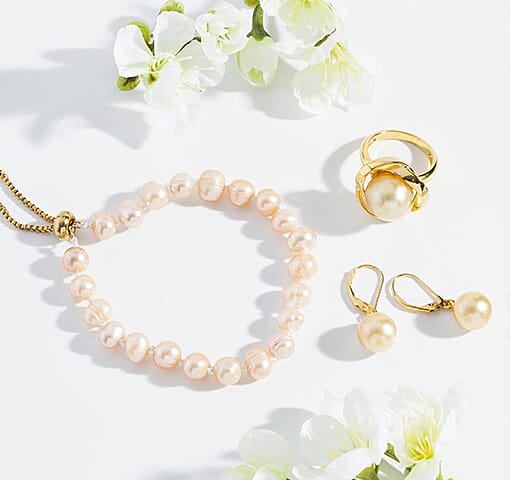
Pearls are naturally found in oysters and created by living organisms. They are admired and prized for their luminous shine and soft glow.
Explore Pearl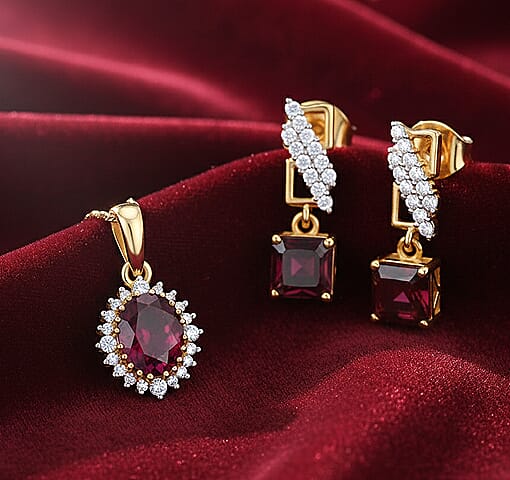
Ruby is considered as the king of gemstones, known for its vivid rich red colour and symbolic association with power and prosperity. The red colour also symbolises love.
Explore Ruby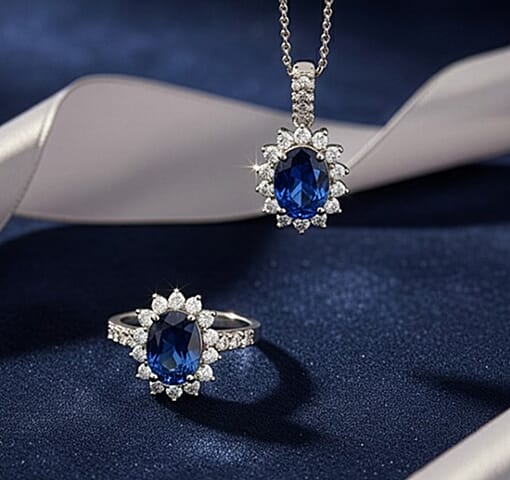
Mainly found in Tanzania, tanzanite is a rare gemstone known for its mesmering intense blue hue that shifts with lights.
Explore Tanzanite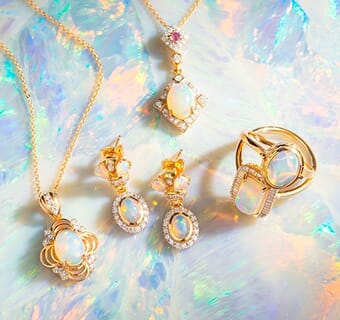
Revered for its enhancing play of shifting colours that reflect the rainbow, making each jewellery piece unique and fascinating.
Explore Opal