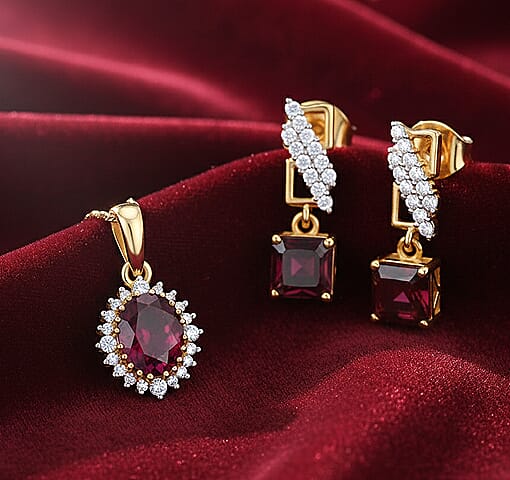
Ruby
Known as the king of gemstones, ruby is prized for its vivid red colour and its symbolic ties to power, prosperity and love.
Explore Ruby
Few gemstones possess a history as rich as the ruby. Coveted for over two millennia, July’s birthstone is woven into royal history — from coronation regalia to heirloom collections. Symbolising passion and energy, it remains one of the most rare and prized coloured gemstones in the world.


Ruby is the red variety of the mineral corundum — the same mineral family as sapphire. This July birthstone takes its name from the Latin word ‘ruber’, meaning red. Prized as the ‘King of coloured gems’, ruby owes its rarity to the trace element chromium, which also gives it that unmistakable deep red glow.
Ruby is the official birthstone for July. Its fiery hue is said to reflect confidence, courage and vitality — traits often linked to those born in the month.
Ruby is one of the four recognised precious gemstones, alongside diamond, sapphire and emerald. Favoured by royalty for centuries, a fine ruby ranks among the most valuable coloured gemstones per carat.
Rubies are often associated with:
Their deep red hue is often linked to love and is seen as a sign of commitment. In the 1800s, French jewelers often referred to ruby as the ‘dearly loved stone’. It is believed to be a representation of love and inspire faithfulness and devotion. Thus, it makes for a perfect gift for Valentine’s day and anniversary.
Ruby hue is very close to the colour of blood, which is believed to carry oxygen to all the parts of the body. Thus, it is believed that rubies have the ability to lend energy to the body and improve overall wellbeing./p>
Ruby’s fiery red hue is associated with blood, life force, strength, and bravery. It is believed to preserve life and ward off danger.
The July birthstone holds significant historical and cultural importance across various cultures.
Ruby stone is mentioned in the bible, highlighting its ancient significance.
Worn by royals and nobles for centuries, the ruby gemstone signifies wealth and power.
In Ancient Burmese and Chinese cultures warriors wore rubies while going to the battlefield believing ruby crystal will deliver protection, strength, and victory to the wearer.
In medieval Europe, rubies were thought to bring wealth, wisdom, and success in love to the wearer. In other cultures, it was believed to protect misfortune by darkening or changing in colour. Red rubies were also thought to help with inflammatory illness and calm anger.
Ruby is considered as the gemstone of 15th and 40th anniversary as it symbolises love, commitment, protection, energy, and vitality. Its red rich colour can signify deep affection, which has grown stronger over decades of marriage. While, its exceptional durability can be linked to the strength and resilience of a lasting relationship. Thus, the 40th wedding anniversary is also known as the ruby anniversary.
Rubies are mainly found in marbles (metamorphic lime deposits) and basaltic rocks (volcanic rocks formed after rapid cooling of lava on the Earth’s surface. However, rubies origin does not determine its value. The real value of ruby depends on its colour and carat weight.
Rubies are found in varied regions across the world like Mozambique, Myanmar, Cambodia, Vietnam, Sri Lanka, The Himalayas, Kenya, Madagascar, Tanzania, etc. However, not all rubies are the same, their origin can affect their colour.

Myanmar (formerly Burma) is one amongst the two main providers of ruby in the world. These marble-hosted rubies found here are revered for their pigeon blood red hue. Burmese rubies are scarce and command high-value owing to their rarity and unparalleled beauty.
The Mozambique rubies are basalt-hosted rubies and come with high iron content. They have a deep red colour and are usually a shade or two darker than the marble-hosted rubies.
These rubies glow with intense red hue owing to fluorescence. They exhibit a high level of transparency and clarity and come with brownish undertones. It is also known as Siamese rubies and originates from Thailand.
The very characteristics of rubies help determine its value: colour, cut, clarity, and carat weight.
Ruby’s red colour comes from chromium and other trace elements found in its crystal structure. The July birthstone’ colour can range from medium dark red to slightly purplish-red to orangish-red or even pinkish-red.
The colour of ruby is the most important factor for its quality. Ruby’s colour is defined by its hue, saturation, and tone.
Hue - Hue refers to the colour we see when we view a ruby.
Saturation - Saturation refers to the vibrancy of ruby gemstone or its richness.
Tone - Tone refers to the lightness and darkness within the ruby gemstone or how it interacts with light.
Rubies are mostly cut into cushion and oval shapes. These cuts help to bring out the deep red hue of the gem, minimize inclusions, and help enhance colour, clarity, and light reflection.
The July birthstone clarity refers to how translucent and clean ruby appears to the naked eye under x10 magnification. Most rubies feature inclusions, which are often seen as a natural consequence of their crystal growth. The rubies with fewer inclusions are considered rarer, making them more valuable and desirable.
The carat weight of the ruby refers to the weight of the ruby. Larger rubies are considered rare and thus are more expensive than smaller rubies of the same quality.
Mohs Scale of Hardness
Yes, ruby ranks 9 on Mohs scale of hardness, which is second only to diamonds (10) making it incredibly durable for everyday wear. Ruby is one of the hardest gemstones in the world and highly resistant to breaking and scratching. This is because the July birthstone has a lack of cleavage, which means it does not split easily because it has no natural weak planes. This makes it an excellent choice for all types of jewellery like rings, earrings, bracelets, and pendants. It particularly is well-suited for engagement rings as it can easily withstand daily wear and tear.

Real rubies are hard and they do not chip or break easily Rubies are second only to diamond in hardness which means a glass or a cheap imitation of ruby can scratch easily, chip or feel lighter.

Real rubies show tiny silky inclusions under magnification. If it’s completely flawless and inexpensive it can be a fake ruby. When buying ruby pay close attention to the colour. Most rubies have a rich, deep red hue and appear fluorescent under UV lightning.
*Note: Rubies can be lab-created too. These lab-created rubies have the same physical, chemical properties and hardness as of the natural ruby gemstone. So, when buying a ruby jewellery always ask for a certification of authenticity which will clearly list ruby’s origin, quality grade, or if any enhancement is done.

The simplest way to find out if ruby earrings, ruby bracelet, or a piece of ruby necklace that you own is real or not is to get it checked by a jewellery professional.
A professional jeweler is specially trained to understand the differences between a real ruby gemstone or an imitation one. They can not just easily spot if a gemstone is real or not but can also tell you about how much they are actually worth.
Rubies are extremely durable and thus can be easily cleaned using varied methods. You can clean ruby jewellery by keeping them in ultrasonic machines and steam cleansers, using a specialized jewellery cleaning solution, or wipe it using a damp cloth. You can also use warm soapy water and a soft-bristled toothbrush to clean the ruby jewellery. Rinse off the soap studs and wipe off with a dry, soft cloth. Avoid submerging the ruby ring or ruby earrings into water as it can loosen the glue and the stone.

Though ruby ranks 9 on Mohs scale and is extremely durable, still it can be scratched by other gemstones with same level of hardness like sapphire or even harder gemstones like diamonds. Store in a soft cloth pouch or other fabric-lined plush jewellery boxes.

Never leave ruby jewellery in the car, around radiators, or strong artificial light. Rubies are highly sensitive to direct sunlight and heat sources, so always store them in a cool and dry place.
Known as the king of gemstones, ruby is prized for its vivid red colour and its symbolic ties to power, prosperity and love.
Explore Ruby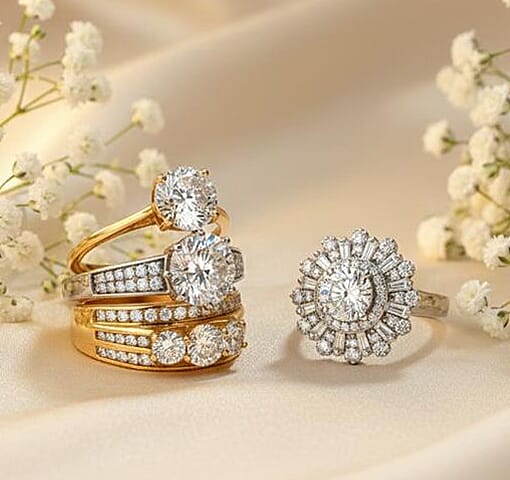
Revered for its unmatched brilliance and hardness, formed deep within the earth over billions of years.
Explore Diamond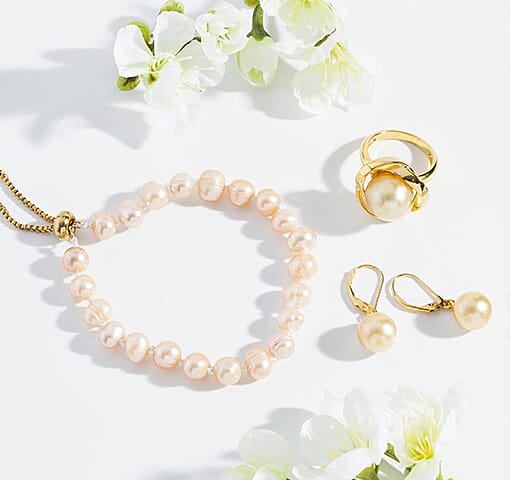
Naturally found in oysters and created by living organisms, pearls are admired for their luminous shine and soft glow.
Explore Pearl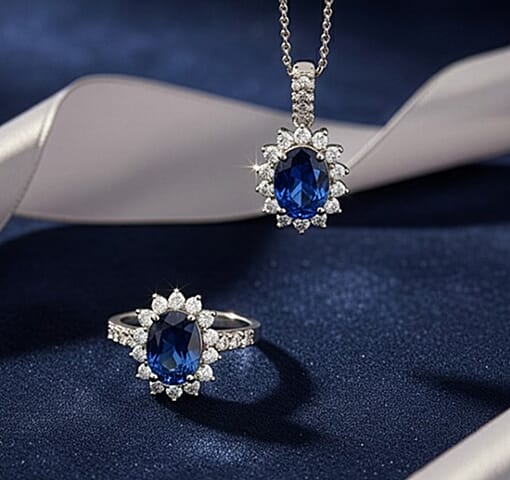
Mainly found in Tanzania, this rare gemstone is known for its mesmerising intense blue hue that shifts with the light.
Explore Tanzanite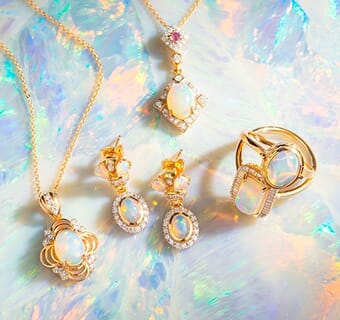
Revered for its enchanting play of shifting colours that reflect the rainbow, making each piece unique and fascinating.
Explore Opal